 Reviews

 Proudly American

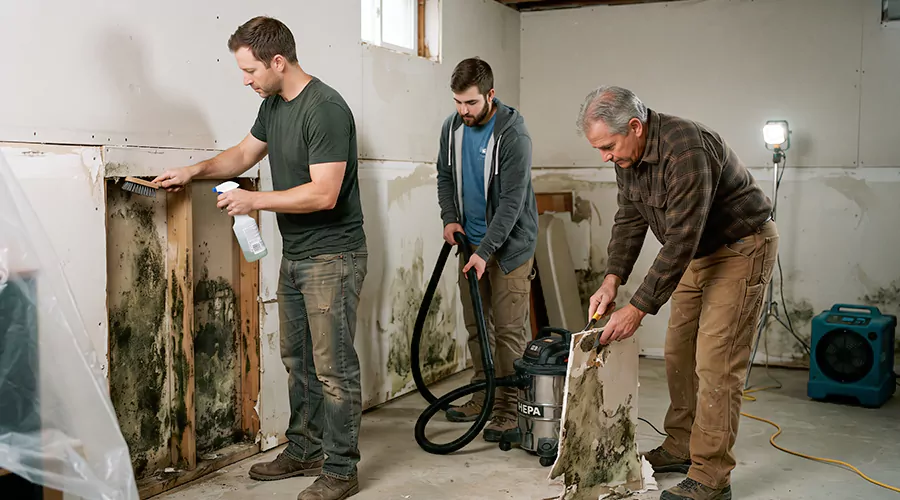
Mold remediation typically takes about 1 to 3 days for a small contained area and 3 to 7 days for a moderate residential project. Larger projects can take one to two weeks or longer when mold has spread into several rooms or wet building materials need additional drying before reconstruction begins.
The cleanup schedule depends less on the color of the mold and more on the affected area or moisture source.
What Is the Typical Mold Remediation Timeline?
Most mold projects move through moisture correction before containment and cleanup. Drying can continue after contaminated materials are removed. Repairs may begin only after moisture conditions are stable.
| Project Scope | Typical Remediation Time |
|---|---|
| Small contained area | 1 to 3 days |
| One affected room | 3 to 5 days |
| Several affected areas | 3 to 7 days |
| Large or hidden contamination | 1 to 2 weeks+ |
| Major water and mold damage | Several weeks including repairs |
These are planning ranges rather than fixed deadlines.
Mold remediation and restoration may take longer than cleanup alone because reconstruction adds another phase.
What Happens During the First Day?
The first day is often used to confirm the affected area and correct the active moisture source. Containment may then be installed before contaminated materials are disturbed.
A typical sequence is:
- Confirm the moisture source.
- Map the affected area.
- Establish containment when needed.
- Protect nearby clean surfaces.
- Begin controlled material removal.
- Start cleaning exposed materials.
Cleanup should not begin with cosmetic repair because a continuing leak can allow mold to return.
How Long Does Material Removal Take?
Small drywall removal may take several hours while several affected rooms can require multiple days. The amount of demolition depends on how deeply growth has entered porous materials.
Common materials that may need removal include:
- Drywall
- Insulation
- Carpet padding
- Ceiling tiles
- Damaged fiberboard
- Some contaminated furnishings
Mold damage cleanup can move quickly when growth stays on accessible materials. Hidden contamination inside several wall cavities adds more time.
How Long Does Structural Drying Take?
Drying often takes two to five days after wet materials are exposed, although dense wood assemblies can take longer. Moisture readings determine when drying is complete rather than a fixed number of days. A dehumidifier can help lower indoor moisture while air movement supports evaporation when appropriate.
Drying time depends on:
- How wet materials became
- Material thickness
- Indoor humidity
- Air movement
- Amount of hidden moisture
- Whether the leak has stopped
Water damage mold remediation can therefore take longer than a dry surface mold problem.
Does the Amount of Mold Affect the Timeline?
Yes. A small visible patch can often be handled much faster than growth extending into several rooms. The EPA commonly uses about 10 square feet as an important dividing point between small household cleanup and situations that may require broader remediation planning. Larger projects take longer because containment and material removal become more involved.
| Mold Area | General Timing Effect |
|---|---|
| Under 10 sq. ft. | Often short cleanup |
| One wall section | Several days |
| Multiple wall cavities | Several days to a week+ |
| Several rooms | One week or longer |
Can Hidden Mold Make Remediation Take Longer?
Yes. Hidden growth can expand the project after finishes are opened. A small surface stain may reveal a larger wet cavity behind the drywall.
Warning signs of hidden contamination include:
- Musty odor with little visible growth.
- Mold returns after cleaning.
- Wall moisture remains high.
- Baseboards swell.
- Paint bubbles repeatedly.
- Flooring stays damp.
- Staining expands.
- Growth appears around outlets.
- Insulation smells musty.
- Several nearby areas show similar symptoms.
Mold restoration can take longer once additional affected material is discovered.
Does Black Mold Take Longer to Remediate?
Not simply because it looks black. Mold color does not determine the remediation schedule. The affected area and material condition matter more. Black mold remediation can be completed in the same general timeframe as other mold cleanup when the scope is similar. A small black-colored patch on a bathroom wall can be a shorter project than light-colored mold spread through several wall cavities.
What Can Delay Mold Remediation?
Delays often occur because the building is still wet or the moisture source has not been corrected. Reconstruction can also be delayed while materials continue drying.
Common delays include:
- Active plumbing leaks
- Roof water intrusion
- Wet insulation
- Hidden wall-cavity growth
- Large affected areas
- Contaminated HVAC components
- Additional damage discovered during removal
Testing can also add time when a specific project requires it, but routine sampling is not always needed when visible mold is already present.
What Can You Check Yourself During Drying?
A moisture comparison can help you see whether an affected material is approaching a dry baseline.
Follow this process:
- Select a dry reference area.
- Record its moisture reading.
- Test the affected material.
- Mark the measurement location.
- Repeat the reading the next day.
- Look for steady improvement.
Do not open walls simply to search for mold when wiring or plumbing may be concealed.
When Should You Call a Professional?
Professional assessment is appropriate when mold affects more than a small isolated area or when contamination extends into several building materials.
Consider professional help when:
- Mold covers more than about 10 square feet.
- Several rooms are affected.
- HVAC contamination is suspected.
- Sewage caused the water problem.
- Insulation contains visible growth.
- Mold keeps returning.
- Wall cavities remain wet.
- The moisture source cannot be found.
Professional mold remediation may involve containment before contaminated material is removed.
How Long Does Reconstruction Take After Remediation?
Repairs happen after cleanup and drying. A small drywall patch may add several days while several rooms can require one to three weeks or more.
| Repair Scope | Typical Added Time |
|---|---|
| Small drywall patch | 2 to 4 days |
| One room | Several days to 1 week |
| Multiple rooms | 1 to 3 weeks |
| Major structural repairs | Several weeks+ |
The restoration timeline should therefore be separated into remediation and reconstruction.
How Can You Keep Remediation From Taking Longer?
Fast moisture control keeps the cleanup scope smaller.
Useful steps include:
- Repair leaks promptly.
- Dry wet materials quickly.
- Keep indoor humidity below 60 percent.
- Check hidden moisture before repainting.
- Investigate musty odors early.
- Avoid covering damp wall cavities.
Conclusion
Mold remediation often takes 1 to 3 days for a small area and 3 to 7 days for a moderate residential project. Large hidden losses can require one to two weeks or longer before repairs begin. Moisture control is usually the biggest factor in the schedule. If growth extends into several rooms or keeps returning, professional assessment can clarify the true cleanup timeline.
Frequently Asked Questions
Can mold remediation be completed in one day?
A very small contained area can sometimes be handled in one day. Drying or repair work may still continue afterward.
Does mold remediation take longer after flooding?
Often, yes. Wet walls or flooring may need several days of drying before reconstruction begins.
Can you stay home during mold remediation?
It depends on the project size and containment plan. Large projects may require keeping occupants away from the work area.
Does mold testing add time to remediation?
It can when testing is required. Visible mold does not always need routine testing before cleanup begins.
How long before drywall can be replaced?
Replacement should wait until the wall cavity is dry enough to close safely.
Does mold color change remediation time?
No. Project size and material condition have a much greater effect than mold color.